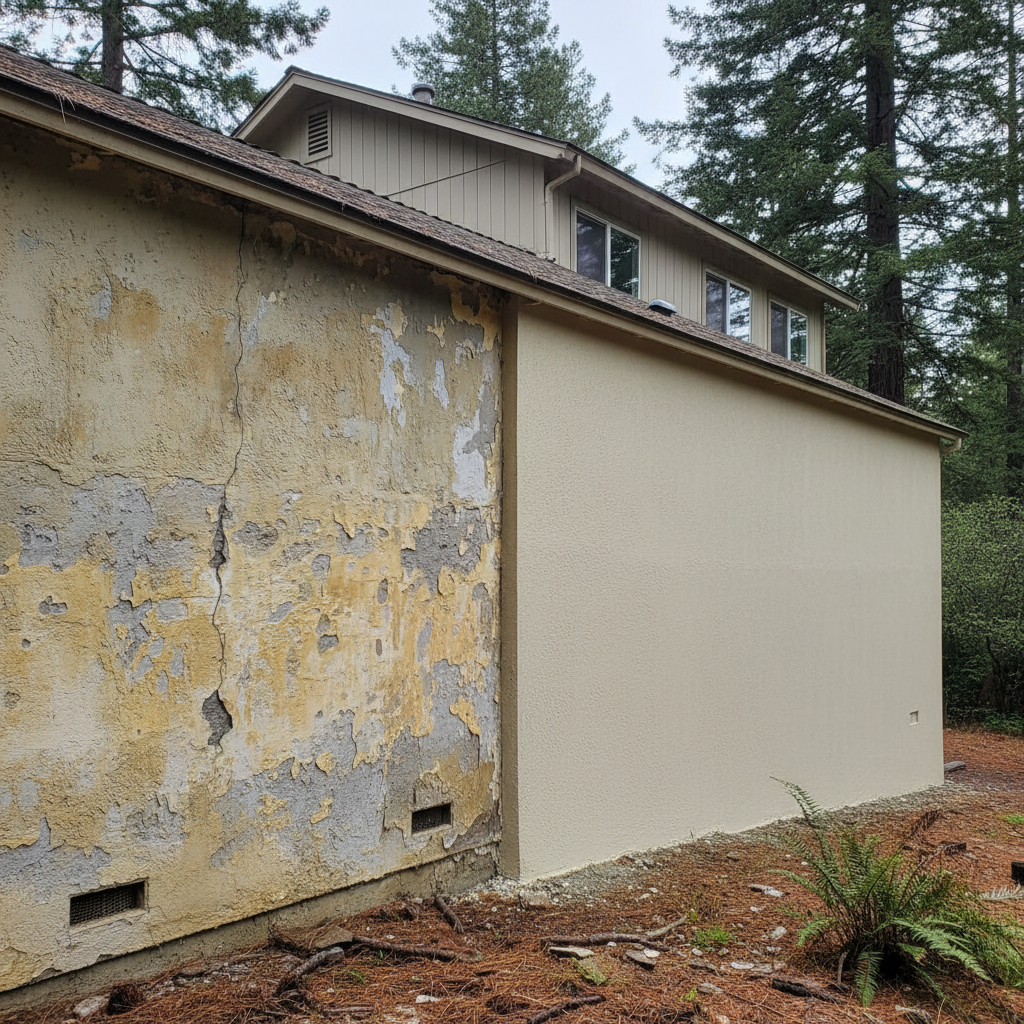
So, you're thinking about EIFS (Exterior Insulation and Finish Systems) for your house. Good call, it's really good for insulation and gives a nice, clean finish. But here's where it gets a little complicated: there are two main ways to put it in – as a barrier system or a drainage system. You might hear people call them 'traditional' and 'newer generation,' but honestly, that's not always the best way to think about it. Let's talk about what each one means for your place right here in Boulder Creek.
Barrier EIFS: The Old Way
Barrier EIFS is probably what most folks picture when they hear EIFS. It's supposed to be a complete seal, stopping any water from getting behind the system in the first place. You've got the insulation board, then the base coat with a mesh, and finally the finish coat. The idea is pretty straightforward: if water can't get in, you won't have a problem.
For a long time, this was just how it was done. It usually costs a bit less to install initially because it's less complex. You don't need all those extra bits for a drainage plane. When it's put in absolutely perfectly, and I mean *perfectly*, it works. The insulation value is fantastic, and you get that smooth, modern look.
However – and this is a really big however – any little break in that barrier can turn into a huge headache. We're talking about tiny cracks from the house settling, windows that weren't sealed quite right, or even just a nail hole from hanging something outside. Once water gets behind a barrier system, it's stuck. It just can't dry out. And what happens when moisture gets trapped against your wall sheathing? You guessed it: rot, mold, and all kinds of structural damage. We've seen it happen, especially in places like Boulder Creek where we get our fair share of fog and heavy winter rains. That constant dampness with no way to escape is just asking for trouble.
Drainage EIFS: The Smarter Evolution
This is what I tell almost every homeowner to go with, especially here in our damp climate. Drainage EIFS, sometimes called 'water-managed' EIFS, understands that some water will, eventually, find its way behind the exterior finish. That's just how it goes with any outside cladding, whether it's stucco, siding, or EIFS.
The big difference with drainage EIFS is that it's built with a clear path for that water to get out. It includes a drainage plane, usually an insulation board with grooves or a separate drainage mat, plus weep holes at the bottom. So, if water does sneak past the outer layers, it hits that drainage plane, trickles down, and exits through the weep holes. It's like having a backup plan built right into your wall system, which is pretty clever, right?
Yeah, it costs a little more to install at the start. There are more components, and it takes a bit more time and skill to do it correctly. But that extra cost is a small price to pay for the peace of mind and protection it offers. It drastically cuts down the risk of moisture damage, which can lead to incredibly expensive repairs later on. Just think about the heavy, wet fog we get rolling in from the coast – that moisture is relentless. A drainage system gives your home a real fighting chance against it.
Cost, Durability, Maintenance, and Appearance
- Cost: Barrier EIFS is usually cheaper upfront. Drainage EIFS costs more because of the extra materials and labor needed for the drainage plane and those weep details.
- Durability: Both systems hold up well against impacts to the finish coat. But drainage EIFS is way more durable when it comes to moisture-related damage, which is the real long-term threat.
- Maintenance: Both need regular checks for cracks or damage, especially around windows and doors. Any breaks need to be sealed right away. With drainage EIFS, you also have to make sure those weep holes stay clear.
- Appearance: From the outside, once it's installed, both systems look exactly the same. You get that smooth, seamless EIFS look. The difference is all in what's happening behind the scenes.
My Recommendation for Boulder Creek Homes
Considering our local conditions – the heavy rains, the constant fog, and the general dampness that can soak into our redwood-shaded properties – I really, really recommend a drainage EIFS system. It's not just about meeting code; it's about building a tough home that can handle our unique weather without developing hidden moisture problems.
Here at Guardian Stucco, we've personally seen the headaches and expenses that trapped moisture can cause. Spending a little more upfront on a proper drainage EIFS system will save you a ton of grief and money in the long run. It's simply the smarter, safer choice for your home here in the Santa Cruz Mountains.